Fuel loss in fleets: warning signs and how fuel sensors help
How Kenyan fleet managers can spot signs of fuel loss and siphoning, and how fuel level sensors linked to GPS tracking help investigate unexplained fuel use.
- Fuel receipts show what was bought, not what happened next.
- Compare fuel use with distance, idling and routes.
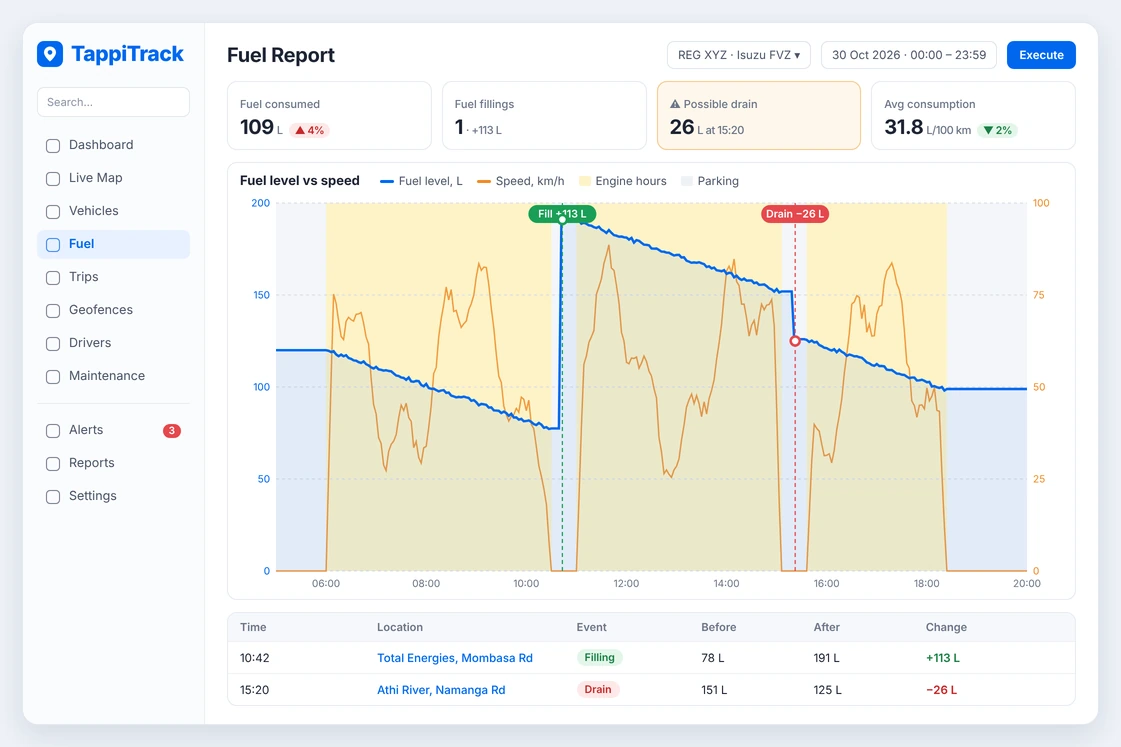
- Fuel level sensors record refuels and sudden drops with time and place.
- Data supports investigation; follow up every exception.
Why fuel loss is hard to see
Fuel is one of the largest running costs for transport businesses, contractors and fleet operators. Yet most businesses only see fuel through receipts and fuel card statements. Those records show how much fuel was bought, but not how it was used afterwards.
Losses can come from several sources: siphoning from the tank, refuels that do not match receipts, unauthorised trips, long idling, or poor driving habits. Without data, it is difficult to tell these apart.
Warning signs to look for
- Fuel spend rising while distance travelled stays the same
- One vehicle using noticeably more fuel than similar vehicles on similar routes
- Refuels at unusual times or places
- Drivers reporting low fuel shortly after a refuel
- Vehicles parked overnight away from base
None of these proves wrongdoing on its own. They are prompts to look more closely at the vehicle's trips, idling and fuel records.
Start with GPS tracking data
GPS tracking already explains a lot of fuel use. Trip history shows unauthorised journeys and detours. Idling reports reveal engines left running while parked. Speed and harsh-driving reports point to habits that waste fuel.
Comparing fuel spend with kilometres travelled per vehicle is a simple first check. Vehicles that stand out deserve attention.
What fuel level sensors add
A fuel level sensor is installed in the tank, calibrated, and connected to the vehicle's GPS tracker. The tracking platform then records the fuel level over time alongside location and trips.
- Refuels: each increase in fuel level is recorded with time and location, so you can compare it with receipts.
- Sudden drops: a fall in fuel level while the vehicle is stationary is flagged for investigation.
- Consumption: fuel used per trip or per period can be compared across vehicles.
Sensors need to suit the tank shape and size, and calibration is important for useful readings. This is why a professional assessment comes before installation.
Turn data into action
Fuel data only helps if someone reviews it. Agree a simple routine: review fuel exceptions weekly, check refuels against receipts, and follow up unexplained drops with the driver and supervisor.
- Set alerts for sudden fuel drops.
- Review the time, location and trip around each event.
- Compare with receipts and driver reports.
- Record the outcome and look for repeat patterns.
Over time, consistent follow-up changes behaviour as much as the technology itself.
Our team can recommend a setup for your vehicles and send a quote.