Push-to-talk or phone calls? Choosing dispatch communication
When push-to-talk group communication makes sense for Kenyan fleets, drivers and field teams compared with individual phone calls, and how it works alongside tracking.

- Push-to-talk suits teams that need quick group updates.
- Phone calls remain better for private, detailed conversations.
- Agree simple call etiquette for drivers.
- Combine voice with tracking for full situational awareness.
What push-to-talk is
Push-to-talk lets a user press a button and speak to a group instantly, like a two-way radio. Instead of calling drivers one by one, a dispatcher can give an update to the whole team at once.
When push-to-talk works well
- Dispatch teams coordinating many drivers at once
- Security and response teams that need instant group updates
- Site teams coordinating machinery and deliveries
- Operations where short, frequent updates are normal
When a phone call is better
Phone calls remain the right choice for private conversations, longer discussions and matters involving a single person, such as performance or personal issues.
Safety on the road
Drivers should follow road safety rules on using communication devices while driving. Agree simple etiquette: keep messages short, and only respond when it is safe to do so.
Voice plus tracking
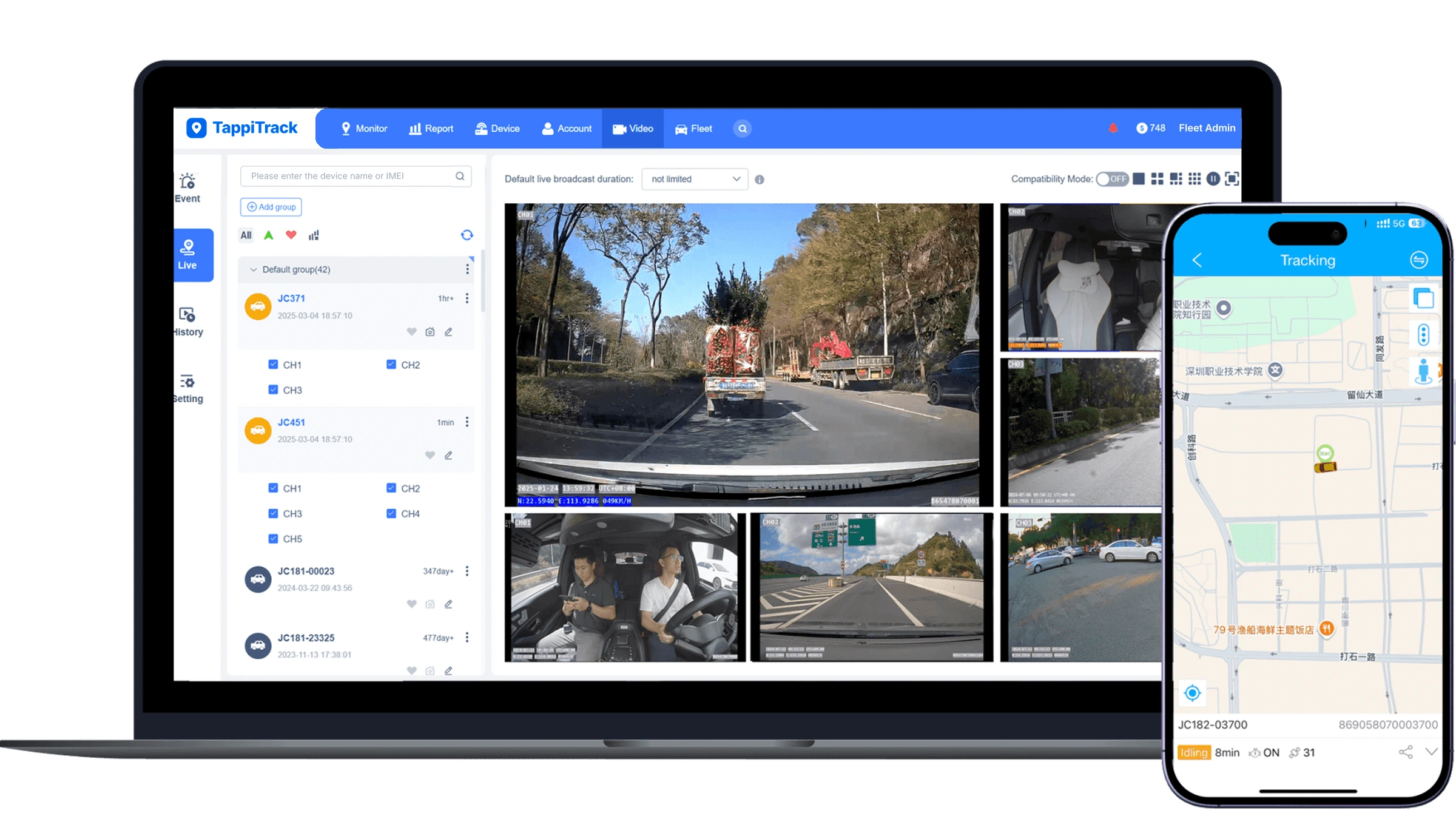
Voice communication works best alongside GPS tracking. The dispatcher sees where each vehicle is on the map and can speak to the right group immediately, which speeds up decisions and reduces repeated calls.
Our team can recommend a setup for your vehicles and send a quote.